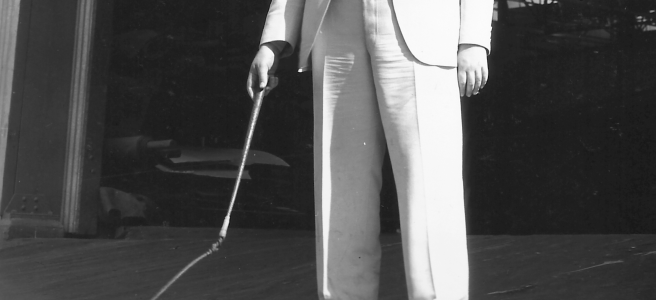
The River has the power to reveal the extent to which other Western films about Southeast Asia will rely on Orientalist tropes about poverty, spirituality, and naturalism. Whether out of a fear of reproducing visual stereotypes or from a keen awareness that he has a lot to learn about India, Jean Renoir decided to adopt … Continue reading #276. The River. Dir., Jean Renoir
The political economic roots of Hollywood strikes, Part 3
[ Missed earlier parts of this series? Find Part 1 here and Part 2 here ] Around the time of this post, SAG-AFTRA and the Alliance of Motion Picture and Television Producers (AMPTP) produced a tentative agreement in their 2023 negotiations. The SAG-AFTRA National Board approved the tentative agreement, and recommends for the ratification of … Continue reading The political economic roots of Hollywood strikes, Part 3
The political economic roots of Hollywood strikes, Part 2
Missed Part 1? You should start here. Around the time of this post, the WGA and the Alliance of Motion Picture and Television Producers (AMPTP) produced a tentative agreement in their 2023 negotiations. The WGA Negotiating Committee, the WGAW Board and WGAE Council all voted unanimously to recommend the agreement on September 26, 2023. As … Continue reading The political economic roots of Hollywood strikes, Part 2
#249. The Battle of Algiers. Dir., Gillo Pontecorvo
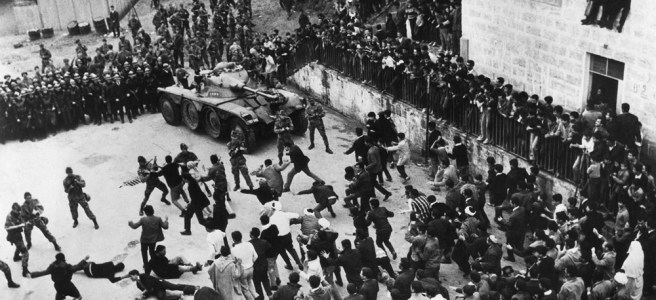
In the moment, many films with explicit politics can feel powerful. Impassioned character dialogue, visual imagery of resistance, or thematically-structured arguments will often strike the audience with the force of a heavyweight boxer. But afterward, the same audience stands and notices, more often than not, that none of the punches left even a mark. Nothing's … Continue reading #249. The Battle of Algiers. Dir., Gillo Pontecorvo
The political economic roots of Hollywood strikes, Part 1
On May 2, 2023, the Writers Guild of America (WGA) went on strike after failing to reach an acceptable agreement with the Alliance of Motion Picture and Television Producers (AMPTP), the trade association that negotiates for the film and television interests of the major Hollywood studios. While many of the disagreements between the parties – … Continue reading The political economic roots of Hollywood strikes, Part 1
#235. The Leopard. Dir., Luchino Visconti
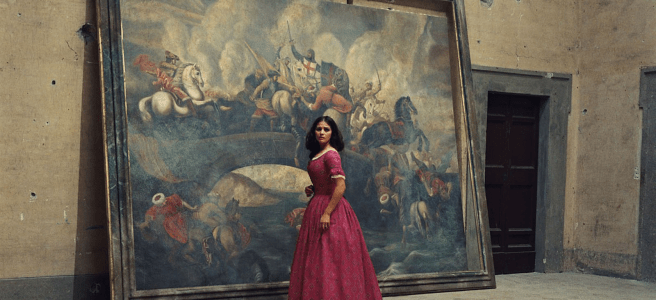
Let's begin with the ending of Visconti's The Leopard. Having attended a ball that went all night and into the early hours of the next morning, Don Fabrizio Corbera, the Prince of Salina, refuses a carriage ride back to his estate. He decided he would walk home alone. This ending is not the ending of … Continue reading #235. The Leopard. Dir., Luchino Visconti
#198. Ali: Fear Eats the Soul. Dir., Rainer Werner Fassbinder
As a visual medium, cinema has its own pathways for an audience to recognize the tragedy of a society forbidding the love between people. A film's script can make the tragedy explicit through the dialogue of approving or disapproving characters, but the visual nature of a film opens multiple opportunities for the couple to communicate … Continue reading #198. Ali: Fear Eats the Soul. Dir., Rainer Werner Fassbinder
What does the growing divide on Rotten Tomatoes mean?
Rotten Tomatoes (RT) found a way to get every last drop from the well of convenience. Film criticism is already pressured, tacitly by convention, or explicitly by editors and bosses, to give bite-size scores with thumbs (up or down), stars (out of 4 or 5), letter grades (with memories of school report cards) or numbers … Continue reading What does the growing divide on Rotten Tomatoes mean?
The habits of Netflix’s users
Like other streaming services, Netflix does not make its user data public. To date, there are two exceptions to this privacy. Netflix released a large dataset of anonymized user activity when it offered a one million dollar prize for the best AI model that could predict user ratings with data between 1998 and 2005. Netflix … Continue reading The habits of Netflix’s users
#196. Hiroshima mon amour. Dir., Alain Resnais
A Klee painting named "Angelus Novus" shows an angel looking as though he is about to move away from something he is fixedly contemplating. His eyes are staring, his mouth is open, his wings are spread. This is how one pictures the angel of history. His face is turned toward the past. Where we perceive … Continue reading #196. Hiroshima mon amour. Dir., Alain Resnais