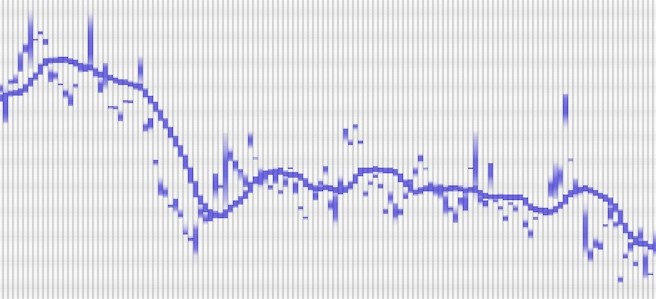
It is useful to start with simple truths when we consider the value of users to Netflix's capital accumulation. To accumulate revenues, Netflix needs users -- either to pay a subscription fee or to be the captive audience for advertising. Moreover, if revenues per user do not increase, such as from price inflation, Netflix will … Continue reading Examining user value in the economics of Netflix: the number of subscribers
Tag: capitalism
Contextualizing mergers and acquisitions in Hollywood, Part 1
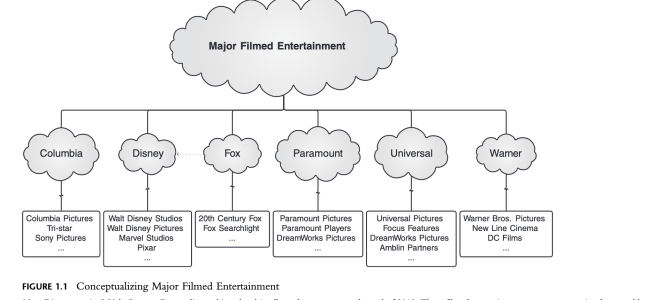
A funny effect of media conglomeration in Hollywood is that many people, including myself, can use corporate names to signal whether we are speaking about Hollywood studios as producers of films, or as parts of giant media conglomerates. When we talk about this or that movie being produced by Warner Bros., Paramount, or Universal, we … Continue reading Contextualizing mergers and acquisitions in Hollywood, Part 1
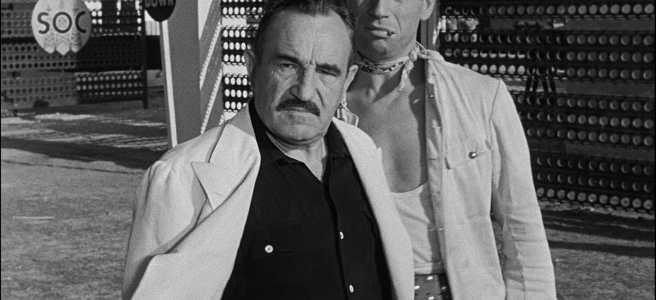
#36. The Wages of Fear. Dir., Henri-Georges Clouzot
I cannot comment on the connection that The Wages of Fear has to Le Salaire de la peur, the source novel that I have not read. But I readily draw connections between The Wages of Fear and the novels of B. Traven, of which I am very fond. Clouzot's film and Traven's novels are both … Continue reading #36. The Wages of Fear. Dir., Henri-Georges Clouzot
Leaving California
To most of us, the beating heart of Hollywood film and TV is where we imagine it is supposed to be, in the historical studio lots of Hollywood, California. This must be where movie magic is made. To those working in film and TV production today, there is certainly not one dream factory, and even … Continue reading Leaving California
Netflix’s Crisis of Accumulation: chart book for my SCMS2025 presentation
I will be presenting at the Society for Cinema and Media Studies (SCMS) conference on Friday, April 4 at 6PM. Here is the chart book for the presentation, which contains sources and notes on all of the figures: [ PDF of SCMS2025 Chart Book ] Here is the original abstract I wrote for the presentation: … Continue reading Netflix’s Crisis of Accumulation: chart book for my SCMS2025 presentation
When Hollywood defines the limits of good cinema
On the question of who judges the quality of a film, it is easy to start with a notion that the ultimate judge of a film's quality is the individual moviegoer. As individual moviegoers, this is often what we think we are doing: we have the autonomy "decide for ourselves" if a film is good … Continue reading When Hollywood defines the limits of good cinema
2022 – Book – The Political Economy of Hollywood
I have recently published a book, titled "The political economy of Hollywood: Capitalist power and cultural production". It is the most comprehensive publication of my political economic research on the Hollywood film business. The book contains new and updated empirical research on the Hollywood film business, both domestically and internationally. Notably, I retrieved a large … Continue reading 2022 – Book – The Political Economy of Hollywood
Making culture rational … with power
A survey of academic writing on the business of culture will show that authors seldomly restrain themselves from making predictions or giving recommendations to the hypothetical economic actor. This offering of future-oriented arguments to an audience should not be surprising. The disciplines of economics, business, management studies and public policy teach people to theorize market … Continue reading Making culture rational … with power
Hollywood’s mantra: “Nobody knows anything”
Your movie turned out the be a flop? "Nobody knows anything". You mistakenly believed consumers wanted to see a movie set in the 1920s? "Nobody knows anything". You thought your casting decisions were going to be loved by all? "Nobody knows anything". "Nobody knows anything"–this was the opening line of Adventures in the Screen Trade, … Continue reading Hollywood’s mantra: “Nobody knows anything”
Why Scorsese is right about corporate power, Part 2
Missed Part 1? Read it here. Part 1 introduced Scorsese’s argument in his Harper’s essay, which was about much more than Fellini. The first part also explained how we can connect Scorsese’s essay to the drive in the Hollywood film business for major film distributors to differentially accumulate, i.e., beat a benchmark that is relevant … Continue reading Why Scorsese is right about corporate power, Part 2